How Modern Aluminum Casting Foundries Create High-Performance Components
Contemporary aluminum casting foundries serve a vital function in producing high-performance components. They utilize advanced techniques like die casting and permanent mold casting to reach remarkable precision. This emphasis on accuracy guarantees that parts satisfy the demanding specifications of industries such as automotive and aerospace. However, the evolution of technology and materials has introduced new challenges and opportunities. Understanding these dynamics is essential for recognizing the future of aluminum casting and its effect on performance.
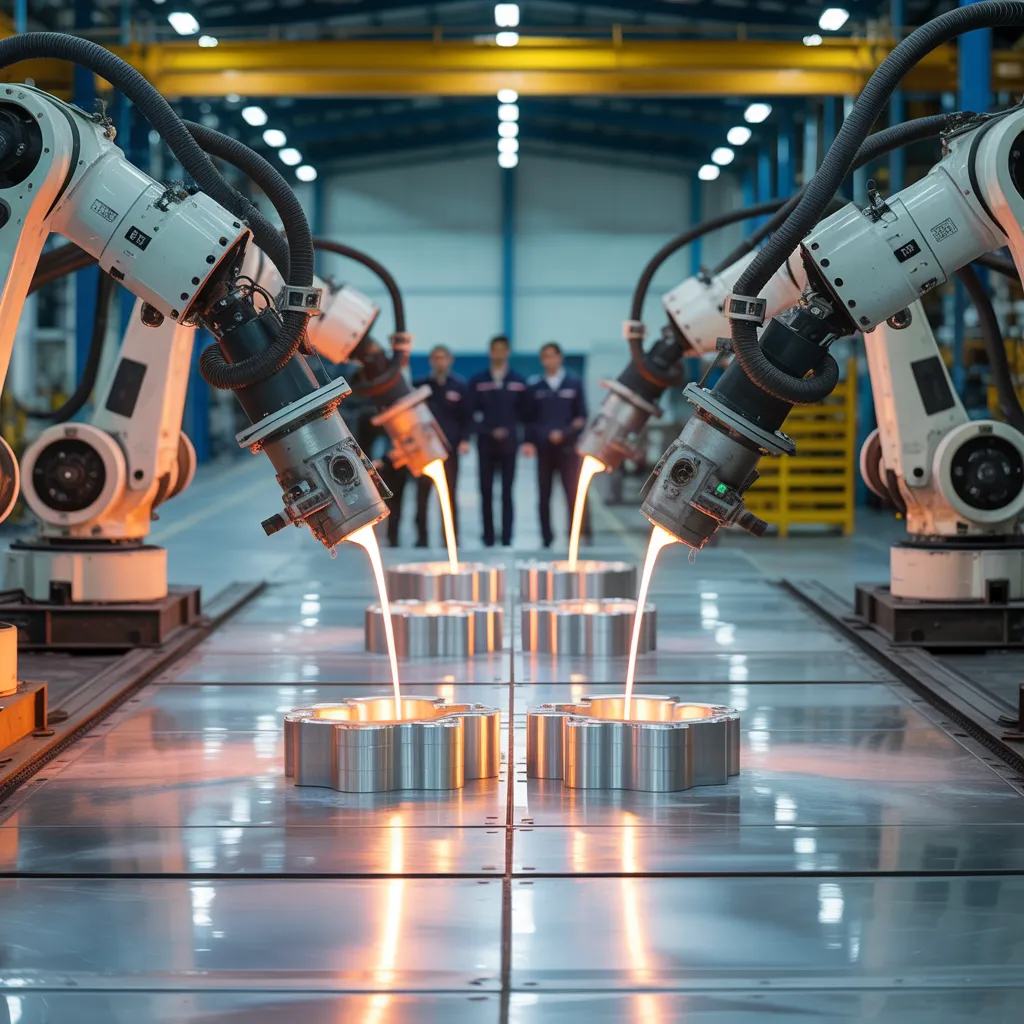
Aluminum Casting Processes Over the Years
As aluminum casting has evolved, various techniques have emerged, each showcasing progress in both technology and materials. Traditional sand casting, formerly the primary process, has slowly been enhanced by increasingly accurate methods like die casting and permanent mold casting. Sand casting, known for its versatility, enables the formation of complex shapes but can be limited by surface finish quality. On the other hand, die casting employs high pressure to force molten aluminum into molds, resulting in components with excellent dimensional accuracy and surface integrity. Permanent mold casting, which employs reusable molds, offers a middle ground, harmonizing the strengths of both sand and die casting. The incorporation of advanced alloys and automated technologies has additionally improved these methods, leading to improved efficiency and reduced waste. Every method addresses distinct applications across multiple sectors, demonstrating the flexibility of aluminum casting in meeting modern manufacturing needs.
Performance-Improving Qualities of Aluminum
The performance-enhancing properties of aluminum make it a favored choice in numerous industrial applications. Its excellent strength-to-weight ratio enables the production of lightweight components without diminishing structural integrity, essential for industries such as automotive and aerospace. Moreover, aluminum demonstrates exceptional corrosion resistance, which increases the lifespan of components placed in harsh environments. Its thermal and electrical conductivity also increases its utility, making it ideal for applications where optimal heat dissipation or electrical performance is vital.
Moreover, aluminum is very malleable, allowing for intricate designs and complex shapes in casting processes, which can lead to more efficient performance in finished products. The potential to alloy aluminum with other metals also enables the customization of properties, tailoring them for specific applications. Overall, these performance-enhancing characteristics position aluminum as a versatile and valuable material in the manufacturing of high-performance components across numerous industries.
How Advanced Technologies Are Reshaping Foundry Operations
Advancements in technology are revolutionizing foundry operations, dramatically enhancing efficiency and precision in aluminum casting processes. Automation and robotics have become vital, streamlining tasks such as mold handling, pouring, and finishing. These technologies not only decrease labor costs but also eliminate human error, creating higher consistency in production.
Furthermore, the integration of cutting-edge computer modeling and simulation tools enables foundries to foresee casting behaviors and enhance designs prior to physical production initiates. This predictive capability boosts material utilization and minimizes scrap rates.
Furthermore, the adoption of smart sensors and IoT devices enables real-time monitoring of equipment and casting conditions, enabling proactive maintenance and process adjustments. Therefore, foundries can attain higher production rates while maintaining stringent quality standards. Overall, these innovations are transforming traditional aluminum casting methods, creating opportunities for more agile and responsive manufacturing environments.
Quality Assurance Methods in Aluminium Casting
Achieving high-quality outcomes in aluminum casting demands stringent quality assurance practices throughout the production process. Foundries utilize methodical inspections at different stages, commencing with raw material verification to confirm compliance with specifications. During the melting and pouring process, temperature control is vital; variations can lead to defects in the final product.
Non-destructive testing methods, such as ultrasonic and radiographic inspections, are used to locate internal flaws without affecting the integrity of the components. Furthermore, dimensional verifications are conducted to verify that castings satisfy precise tolerances, which is crucial for high-performance applications.
Documentation plays an essential role in quality assurance; retaining comprehensive records of inspections and tests assists in tracing defects back to their sources. Personnel training is similarly essential, as qualified workers can significantly impact the quality of casting. By implementing these rigorous quality assurance practices, aluminum casting go to article foundries enhance the dependability and effectiveness of their components, confirming they meet industry standards.
Rising Developments in Aluminium Component Design
Quality assurance practices in aluminum casting have built a robust foundation for the evolution of aluminum component design. As technology develops, designers are increasingly selecting lightweight, high-strength materials that improve performance while reducing weight. Innovations in casting techniques, such as 3D printing and additive manufacturing, are facilitating more intricate designs that were previously impossible. This shift allows the creation of complex geometries that optimize airflow and thermal management, particularly in vehicle and aircraft applications.
Additionally, there is a rising trend toward sustainability, with a focus on reclaiming aluminum and decreasing waste in the production process. Designers are also giving priority to functionality, embedding features that enhance durability and resistance to corrosion. Finally, these emerging trends reflect a commitment to not only fulfill performance standards but also address environmental concerns, defining the future of aluminum component design.
Questions & Answers
Which Industries Mainly Utilize Aluminum Casting Components?
Aluminum cast components are chiefly employed in the automotive, aerospace, construction, and electronics industries. These sectors value aluminum's lightweight, durability, and corrosion resistance, making it indispensable for creating premium-performance products and parts.
How Can Aluminum Casting Stack Up Against Other Materials in Terms of Performance?
Aluminum casting provides superior strength-to-weight ratios and corrosion resistance when compared with materials including steel and plastic. Its low weight characteristics improves performance in automotive as well as aerospace applications, making it a favored option for high-performance components.
What Safety Practices Are Observed in Aluminum Casting Foundries?
Foundries specializing in aluminum casting employ multiple safety protocols, such as personal protective equipment for workers, ventilation systems to control fumes, scheduled equipment maintenance, worker safety education programs, and adherence to industry regulations to guarantee a safe working environment.
How Do Environmental Regulations Shape Aluminum Casting Processes?
Environmental standards force aluminum casting foundries to embrace environmentally friendly technologies, minimize emissions, and handle waste in a responsible manner. Compliance with these regulations often leads to increased operational costs but drives innovation and sustainable practices within the industry.
What Costs Are Typically Associated With Aluminum Casting?
Standard costs connected to aluminum casting fluctuate substantially, commonly ranging from $2 to $10 per pound, determined by factors such as material quality, design complexity, production volume, and finishing requirements, influencing overall project budgets significantly.